Bitcoin is a digital currency that runs on a shared network of computers instead of a bank or government. Nobody issues it or controls it from one place, and only 21 million coins can ever exist. People use it to send value online and to hold it as a long-term asset, but its price swings hard and you can lose money.
What Bitcoin actually is
Think of Bitcoin as two things with one name. There is the network, which is software running on computers around the world. And there is the coin, often written as BTC, which is the money that moves across that network.
When you own Bitcoin, you do not hold a physical coin or a file. The network keeps a public record of who controls which coins. What you hold is a private key, a secret code that lets you move your coins. Our guide to crypto wallets explains how those keys are stored.
You do not need to buy a whole coin. One bitcoin splits into 100 million smaller units called satoshis, or sats, so one sat is 0.00000001 BTC. If you are new to the wider topic, start with what is cryptocurrency.
Who created Bitcoin
A person or group using the name Satoshi Nakamoto introduced Bitcoin on 31 October 2008, in an email to a cryptography mailing list. The email shared a paper called "Bitcoin: A Peer-to-Peer Electronic Cash System". "Peer-to-peer" means people deal with each other directly, with no middleman in between.
The network started on 3 January 2009, when the first block, known as the genesis block, was mined. It carried a line of text quoting that day's headline in The Times of London: "Chancellor on brink of second bailout for banks."
How Bitcoin works
Bitcoin solved a hard problem: stopping people from spending the same digital coin twice. Banks normally prevent this by keeping the records. Bitcoin does it with a shared record and a contest.
- You send a transaction. Your wallet signs it with your private key and broadcasts it to the network.
- It waits in line. Unconfirmed transactions sit in a waiting area called the mempool.
- Miners build a block. Miners are computers that bundle waiting transactions into a block. They tend to pick the ones paying higher fees first.
- Miners compete. Each miner keeps guessing at a number until one finds a result that beats a target. This is called proof of work, and it takes real computing power and electricity.
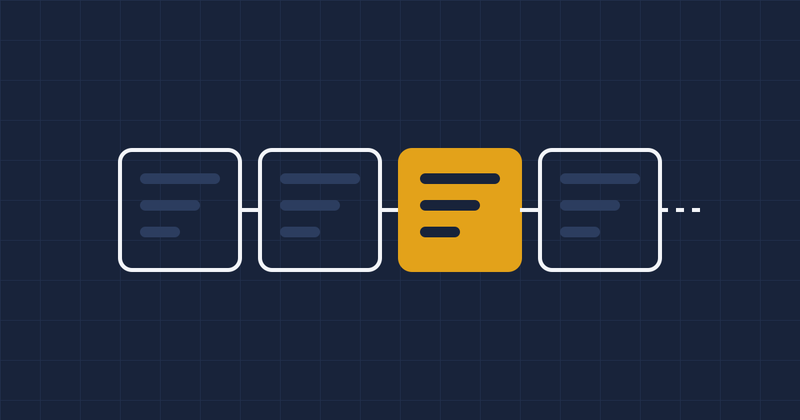
- The block joins the chain. The winner adds the block to the blockchain and earns a reward. Each block links to the one before it, which makes old records very hard to change.
The network aims for a new block about every 10 minutes. To hold that pace, it adjusts the difficulty of the contest every 2,016 blocks, which is roughly every two weeks. If blocks arrived too quickly, the contest gets harder. If they came too slowly, it gets easier.
Fees work like an auction. Each block has limited space, and nobody sets the price. When the network is busy, people bid more to get in sooner, so fees rise. When it is quiet, a lower fee can be enough.
Why only 21 million, and what is a halving?
New bitcoins enter circulation as the reward paid to miners. Bitcoin's rules cap the total at 21 million coins. Most national currencies have no fixed limit like this, which is why some people call Bitcoin scarce.
The reward is cut in half every 210,000 blocks, which works out to about every four years. This event is called a halving. The first miners earned 50 BTC per block. The latest halving, on 19 April 2024, cut the reward from 6.25 BTC to 3.125 BTC. The next one is expected in 2028.
A capped supply does not guarantee a higher price. Price also depends on demand, and demand can fall quickly. There is another twist too: some coins are gone for good because their owners lost their keys. Estimates vary widely, but several put the figure in the range of about 2 to 4 million BTC.
What people use Bitcoin for
- Holding it as an asset. Many people buy it as a long-term bet. Some call it "digital gold", but that is a comparison, not a fact, and it has not behaved like a stable store of value.
- Sending money. You can send Bitcoin to anyone with a wallet, at any time, with no bank in the middle.
- Small, fast payments. The Lightning Network is a second layer built on top of Bitcoin. Two people open a payment channel, pay back and forth off the main chain, then settle the final result in one on-chain transaction. It can be harder for beginners to use, and both sides need to be online.
- Investing through regulated funds. In January 2024, the US Securities and Exchange Commission approved 11 spot Bitcoin exchange-traded funds. These let people get price exposure through a normal brokerage account. The SEC's chair stressed at the time: "we did not approve or endorse bitcoin."
Everyday shopping is a much smaller use. El Salvador made Bitcoin legal tender in September 2021, but changed its law in January 2025, as part of a loan deal with the International Monetary Fund, so that businesses no longer have to accept it.
The main risks
- Price swings. Bitcoin fell from about $20,000 in late 2017 to about $3,200 in December 2018, a drop of around 84%. It then fell more than 70% from its November 2021 high of about $68,000 to below $20,000 by June 2022. Past moves, up or down, tell you nothing certain about the future.
- No undo button. Bitcoin payments cannot normally be reversed. If you send coins to the wrong address or to a scammer, they are usually gone.
- Lost keys. No company can reset your access. If you lose your private key and backup, you lose your coins.
- Scams. Fake investment sites, "guaranteed return" offers and impersonators are common. Read our guide to crypto scams before you send anything.
- Privacy limits. The ledger shows addresses, not names, but every transaction is public. If an address gets linked to you, your activity can be traced.
- Rules and tax. Laws differ by country and they change. In many places, selling or spending Bitcoin can trigger tax. See how crypto is taxed.
- Energy use. Mining uses a lot of electricity. A Cambridge University report from April 2025 estimated about 138 TWh a year, roughly 0.5% of world electricity use, with 52.4% coming from renewable and nuclear sources. These figures are estimates and change over time.
How to get started safely
If you decide to buy, take it slowly.
- Only use money you can afford to lose.
- Learn how to choose a crypto exchange, and check that it is allowed to operate in your country.
- Start with a small amount. Practise a small withdrawal to your own wallet before moving more.
- Write your wallet's recovery phrase on paper and keep it private. Never type it into a website or share it with "support".
- Keep records of what you buy and sell for tax.
Readers in India can follow our guide on how to buy crypto in India, and readers in the UAE can check the UAE rules, tax and exchanges guide.
FAQ
Is Bitcoin real money?
It works as money for people who accept it, but very few governments treat it that way. In most places it is better understood as a digital asset. Its legal status depends on your country.
Can I buy less than one bitcoin?
Yes. One bitcoin divides into 100 million satoshis, so you can buy a small fraction. Exchanges set their own minimum amounts and fees, so check the official site.
Is Bitcoin anonymous?
Not fully. Transactions appear on a public record under addresses rather than names, but those addresses can often be linked to real people, for example through an exchange that verified your identity.
What happens when all 21 million are mined?
New coins stop. Miners would then be paid only through transaction fees, which they already collect today alongside the block reward.
Is Bitcoin a good investment?
Nobody can promise that. It has had large rises and large falls, and it could fall again. Decide based on your own finances, and never invest money you need for bills or emergencies.
This is not financial advice. Crypto is volatile and you can lose money. Do your own research.